

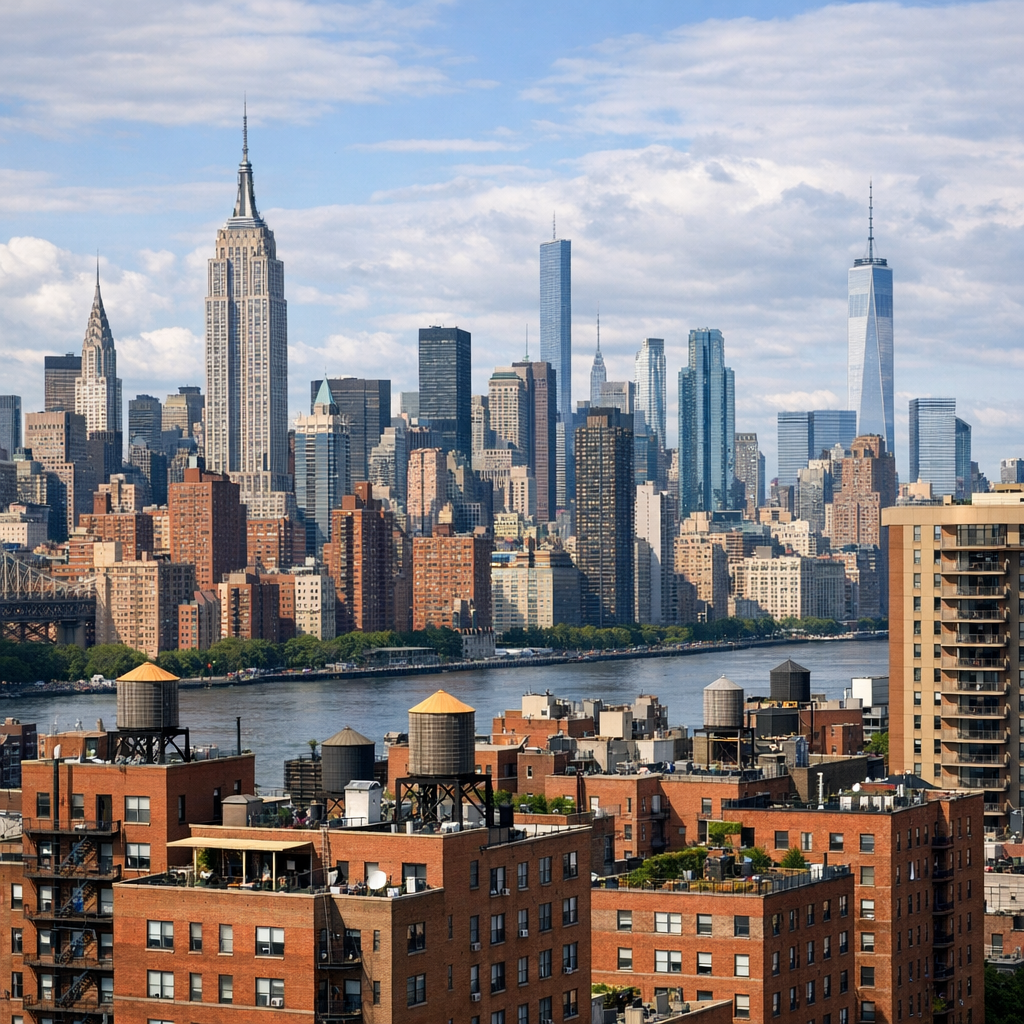
New York City’s real estate market continues to exhibit dynamic shifts, reflecting broader economic trends and local developments. Understanding these changes is crucial for prospective buyers, renters, and investors.
Current Market Trends
As of March 2026, the median sale price for homes in New York City reached $865,000, marking a 4.8% increase from the previous year. The median price per square foot stood at $603, a 9.12% decrease year-over-year. Homes are selling after an average of 80 days on the market, slightly longer than the 75-day average from the prior year. The number of homes sold in March was 2,432, a slight decrease from 2,451 in the same month last year. Source
Rental Market Insights
The rental market remains robust, with the median monthly rental price in New York City at $4,000 as of February 2026, showing stability with no significant year-over-year change. Notably, Manhattan’s median monthly rent is higher at $5,060, reflecting the borough’s premium market status. Source
New Developments and Housing Initiatives
Several significant housing projects are underway to address the city’s housing needs. Community Access is developing 213 units in the East Tremont/Crotona area of the Bronx, projected to open in 2028, and 292 units in the Concourse area, expected to open in 2029. These projects aim to provide affordable and supportive housing options. Source
Additionally, Hudson Inc. has been a key player in the New Homes Program, completing over 1,800 affordable homeownership units across Brooklyn, Queens, and the Bronx. These developments have been recognized for their contextual design and contribution to affordable housing. Source
Conclusion
New York City’s real estate market is characterized by rising home prices, a stable rental market, and ongoing development projects aimed at increasing affordable housing. Staying informed about these trends is essential for making informed decisions in this ever-evolving landscape.