

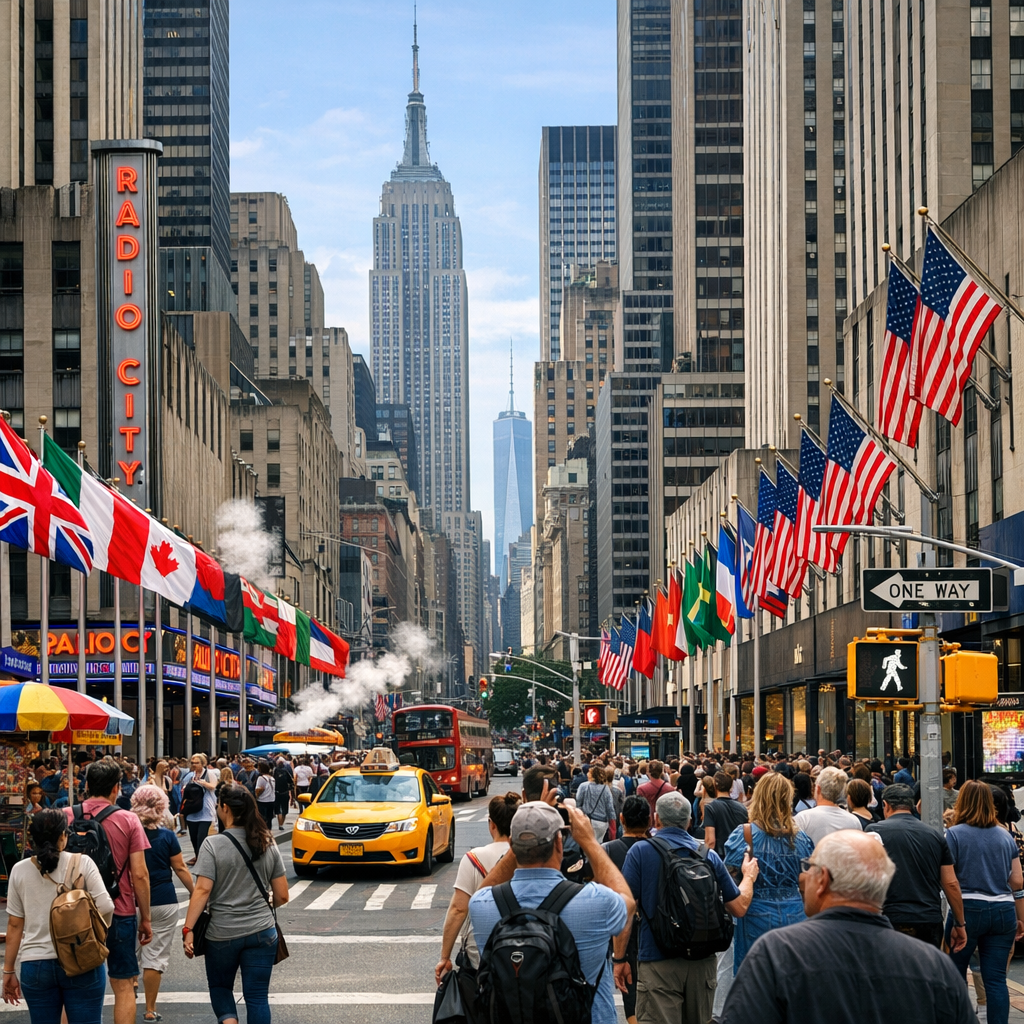
New York City, a global hub for culture, finance, and tourism, continually experiences economic fluctuations influenced by international events. Recent analyses highlight the significant impact of such events on the city’s economy.
Major League Baseball’s Economic Contribution
The New York City Economic Development Corporation (NYCEDC) projects that the 2026 Major League Baseball (MLB) regular season will generate approximately $800 million in economic activity for the city. The New York Yankees’ home games are expected to contribute around $500 million, while the New York Mets’ home games are anticipated to add about $300 million. This influx is attributed to increased spending on tickets, concessions, merchandise, and local businesses surrounding the stadiums. Source
Tourism Trends and International Travel
In 2025, New York City welcomed 65 million visitors, generating an economic impact of $84.7 billion. This figure includes $55.6 billion in direct spending and supported approximately 397,000 jobs. Notably, domestic travel remained robust, accounting for 52.4 million visitors—a 1.7% increase from the previous year. However, international travel declined by 3.2%, totaling 12.5 million visitors. This decrease underscores the city’s reliance on global events and international visitors to sustain its tourism sector. Source
Upcoming Global Events: FIFA World Cup 2026
Looking ahead, the FIFA World Cup 2026 is set to have a substantial economic impact on the New York metropolitan area. While no matches will be played within the city proper, nearby MetLife Stadium in New Jersey will host eight matches, including the final. The host committee projects that the World Cup will bring $3.3 billion in economic impact and produce $430 million in tax revenue. City officials are working to ensure that this global event delivers tangible benefits to New York City residents, particularly those in working-class communities. Source
The United Nations’ Presence
Beyond sports and tourism, the United Nations (UN) headquarters in Midtown Manhattan contributes significantly to the city’s economy. A report from the Mayor’s Office of International Affairs indicates that the UN generates $3.69 billion in total economic output for New York City. The UN community employs approximately 15,890 individuals, whose household spending and operating expenditures support local businesses and sustain jobs across the city. Source
Conclusion
Global events and institutions play a pivotal role in shaping New York City’s economic landscape. From major sporting events like the MLB season and the upcoming FIFA World Cup to the enduring presence of the United Nations, these international influences drive tourism, create jobs, and stimulate local businesses. As the city continues to navigate the complexities of a globalized economy, understanding and leveraging these connections remain essential for sustained growth and prosperity.