

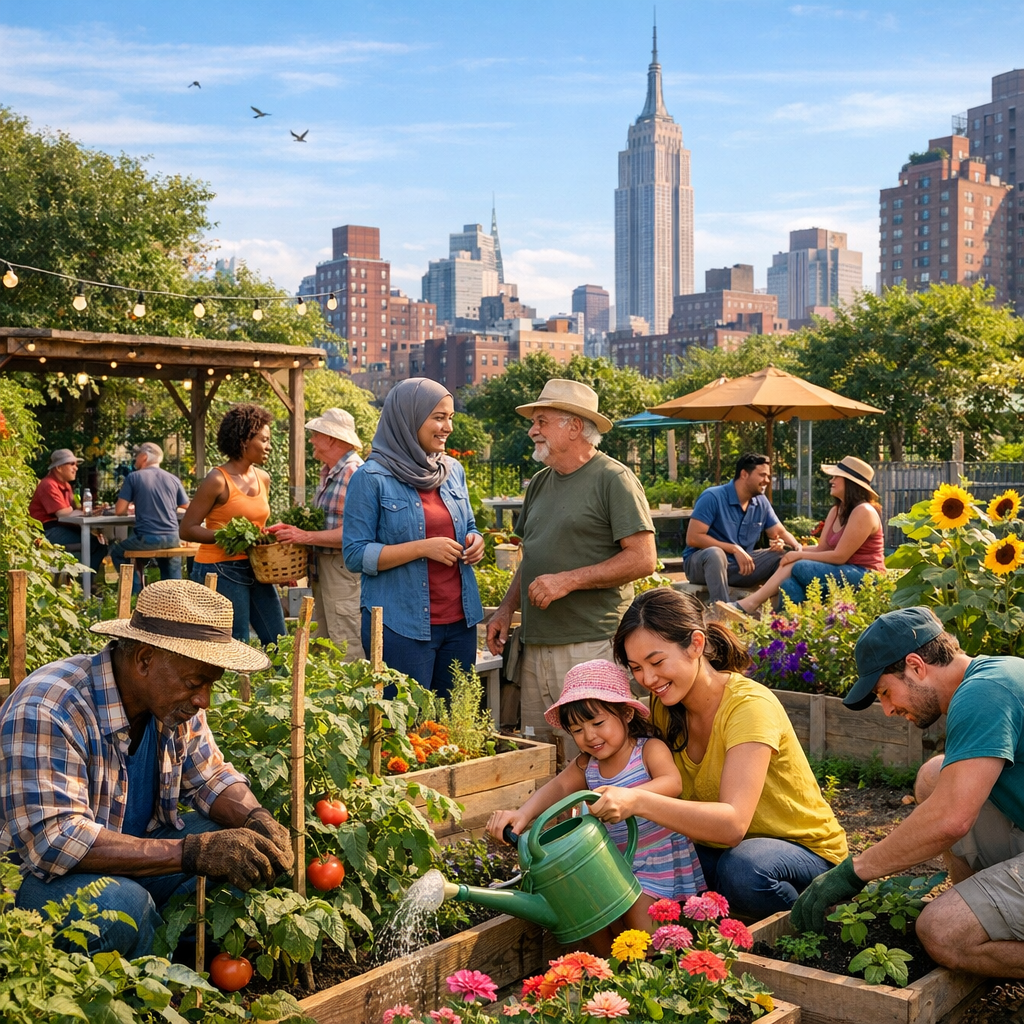
In the heart of New York City, amidst the towering skyscrapers and bustling streets, community gardens have emerged as vital spaces for residents to connect, cultivate, and collaborate. These green sanctuaries not only provide a respite from urban life but also play a crucial role in strengthening neighborhood ties and promoting environmental stewardship.
The Growth of Community Gardens in NYC
New York City boasts over 550 community gardens on city property, with additional gardens in schools, land trusts, and public housing developments. These gardens are often established on underutilized land and are maintained by dedicated residents who transform vacant lots into vibrant communal spaces.
Fostering Social Connections
Community gardens serve as gathering places where neighbors can meet, share resources, and work towards common goals. They host events, workshops, and communal activities that encourage interaction and collaboration among diverse groups. For instance, The Lotus Garden on the Upper West Side not only offers individual plots but also organizes public events and open hours, inviting the broader community to engage with the space.
Promoting Environmental Awareness
Beyond social benefits, these gardens contribute to environmental education and sustainability. Organizations like GrowNYC operate programs that promote access to fresh food, community gardens, and environmental education across the five boroughs. By participating in gardening activities, residents gain firsthand experience in sustainable practices, composting, and urban agriculture, fostering a deeper connection to the environment.
Challenges and Opportunities
Despite their numerous benefits, community gardens face challenges such as securing long-term land access and funding. Initiatives like the Cooperative Economics Alliance of New York City (CEANYC) support these gardens by providing resources and advocating for policies that protect and expand community-controlled spaces.
In conclusion, community gardens are more than just plots of land; they are dynamic spaces that nurture social bonds, promote environmental responsibility, and enhance the quality of urban life. As New York City continues to evolve, these gardens remain essential in cultivating resilient and connected communities.