

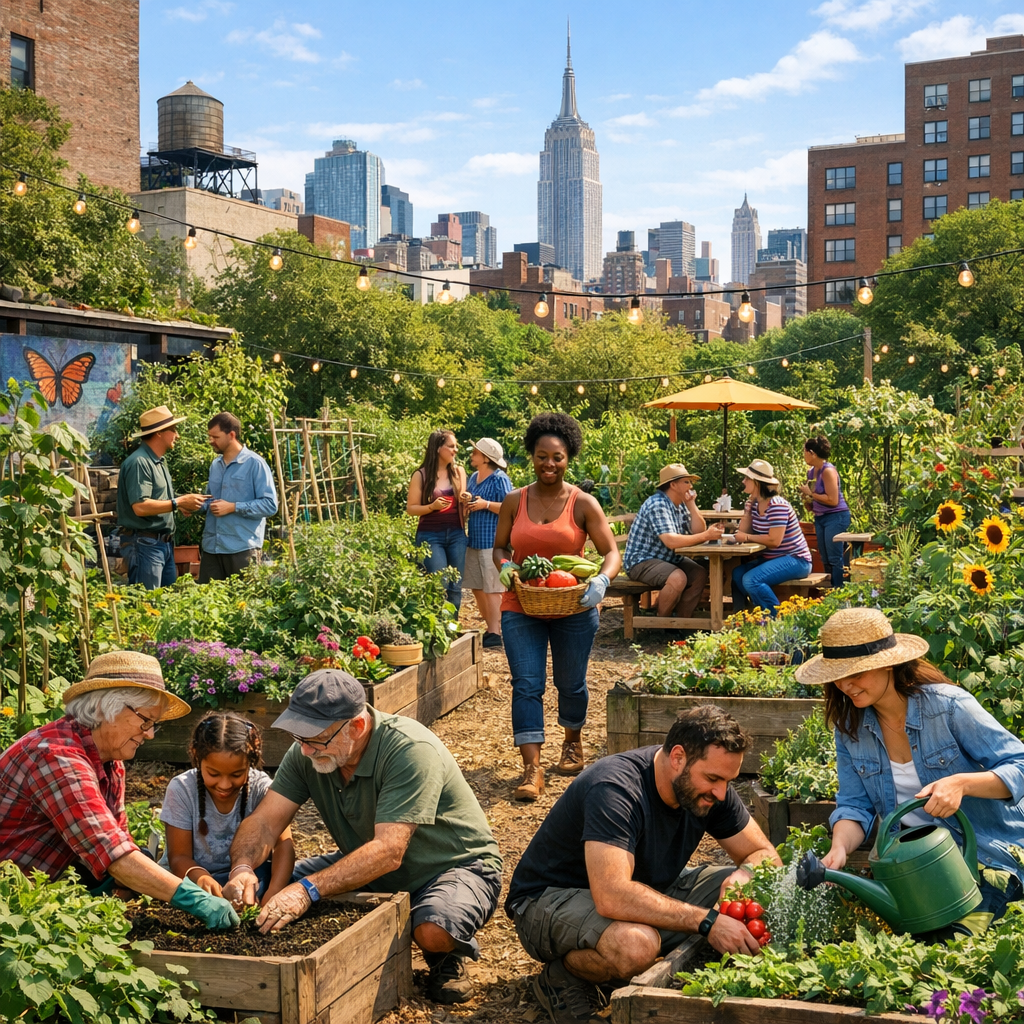
New York City’s community gardens are more than just green spaces; they are vibrant symbols of resilience, community engagement, and environmental stewardship. These gardens have transformed vacant lots into thriving hubs of activity, fostering connections among residents and providing essential green space in the urban landscape.
Historical Roots
The origins of community gardening in New York City date back to the late 19th century. In 1895, the New York Association for Improving the Condition of the Poor initiated the first community gardens, aiming to address food insecurity and promote self-sufficiency among urban dwellers. This early effort laid the groundwork for a movement that would gain significant momentum in the decades to follow.
The Green Guerillas and the Birth of GreenThumb
During the 1970s, amidst a backdrop of economic decline and urban decay, grassroots organizations like the Green Guerillas emerged. Founded by Liz Christy, this group began by throwing ‘seed bombs’ into vacant lots to introduce greenery into neglected areas. Their efforts led to the establishment of the Bowery-Houston Community Farm and Garden in 1974, later renamed the Liz Christy Garden in her honor. Recognizing the value of these community-led initiatives, the city launched the GreenThumb program in 1978 to provide support and resources to gardeners across the five boroughs.
Community Gardens Today
Today, New York City boasts over 550 community gardens on city property, with additional gardens in schools, public housing developments, and land trusts. These spaces serve multiple purposes: they are places for growing fresh produce, venues for educational programs, and sanctuaries for residents seeking respite from the urban hustle. Gardens like the Clinton Community Garden in Hell’s Kitchen, which became the first community garden to receive permanent parkland status in 1984, exemplify the enduring impact of these green spaces.
Challenges and Triumphs
Despite their successes, community gardens have faced challenges, particularly regarding land use and development pressures. In the late 1990s, many gardens were threatened by plans for urban development. However, advocacy and legal actions led to the preservation of numerous gardens, highlighting the community’s commitment to these vital spaces. The Esperanza Garden’s demolition in 2000 served as a poignant reminder of the ongoing struggle between urban development and community green spaces.
Looking Ahead
The future of New York City’s community gardens depends on continued community involvement and supportive policies. These gardens not only enhance urban biodiversity but also strengthen social ties and promote environmental education. As urban areas continue to evolve, the preservation and expansion of community gardens will remain crucial for fostering sustainable and inclusive communities.