

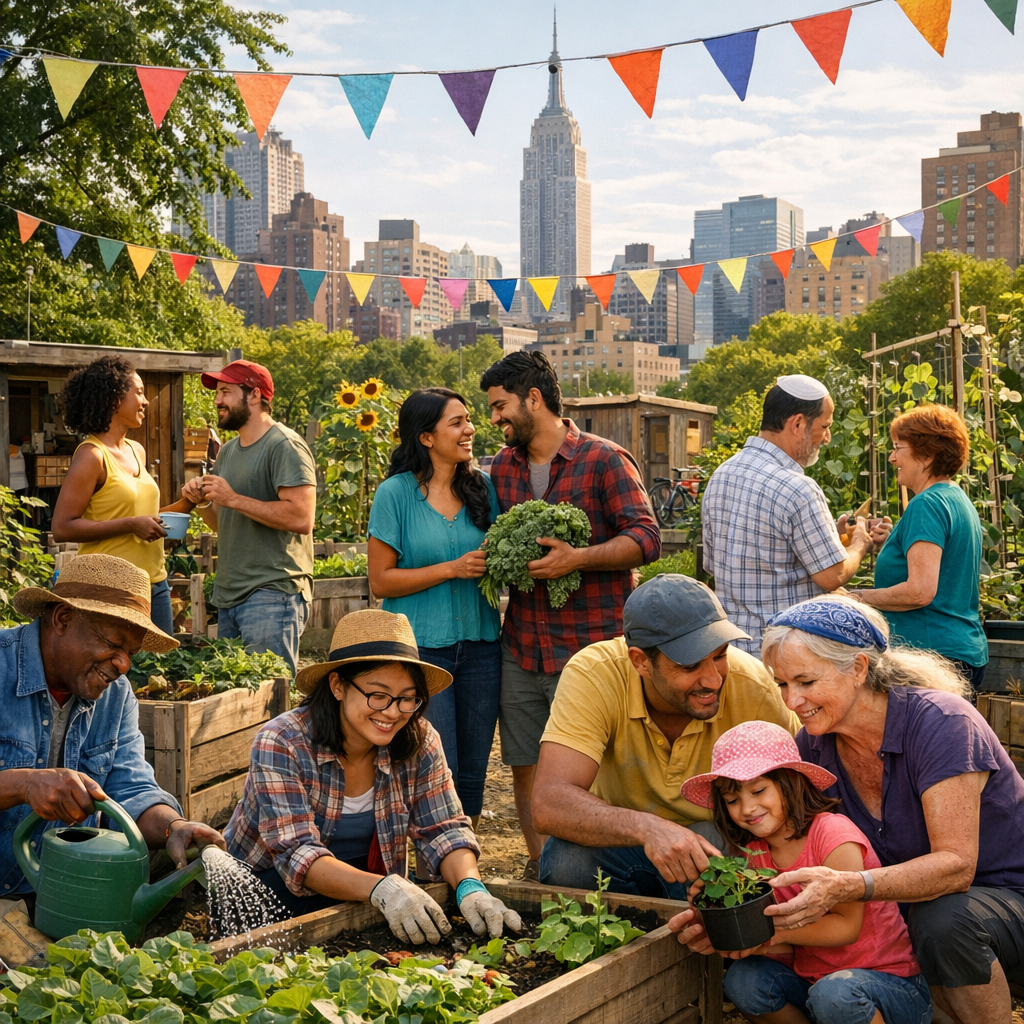
In the heart of New York City’s bustling neighborhoods, community gardens serve as vital green spaces that bring residents together, promote environmental stewardship, and enhance urban living. With over 600 community gardens across the five boroughs, these spaces offer more than just a place to grow plants—they cultivate community spirit and resilience.
A Brief History
The community gardening movement in NYC began in the 1960s and 1970s, a period marked by urban decline and vacant lots. Residents transformed these neglected spaces into vibrant gardens, fostering a sense of ownership and pride. Notable examples include the Liz Christy Garden, established in 1974, and the Esperanza Garden, founded in 1978. These gardens became symbols of community activism and environmental consciousness.
Benefits to the Community
Community gardens offer numerous advantages:
- Social Cohesion: They provide communal spaces where neighbors can connect, collaborate, and build relationships, strengthening the social fabric of neighborhoods.
- Environmental Impact: Gardens improve air quality, support biodiversity, and mitigate urban heat effects, contributing to a healthier environment.
- Food Security: Many gardens grow fruits and vegetables, offering fresh produce to communities and promoting healthy eating habits.
- Educational Opportunities: They serve as outdoor classrooms, teaching children and adults about horticulture, sustainability, and nutrition.
Challenges and Preservation Efforts
Despite their benefits, community gardens have faced challenges, including threats from urban development and changing city policies. In the late 1990s, many gardens were at risk due to plans for housing development. Advocacy groups like the New York City Community Garden Coalition, founded in 1996, have worked tirelessly to preserve these spaces. Their efforts have led to the protection of numerous gardens, ensuring they remain community assets.
Getting Involved
For those interested in joining or supporting a community garden, organizations like GreenThumb provide resources and assistance. Volunteering offers a chance to contribute to the community, learn new skills, and enjoy the benefits of urban gardening.
Community gardens are more than plots of land; they are the heartbeats of neighborhoods, fostering unity, resilience, and a connection to nature amidst the urban landscape.