

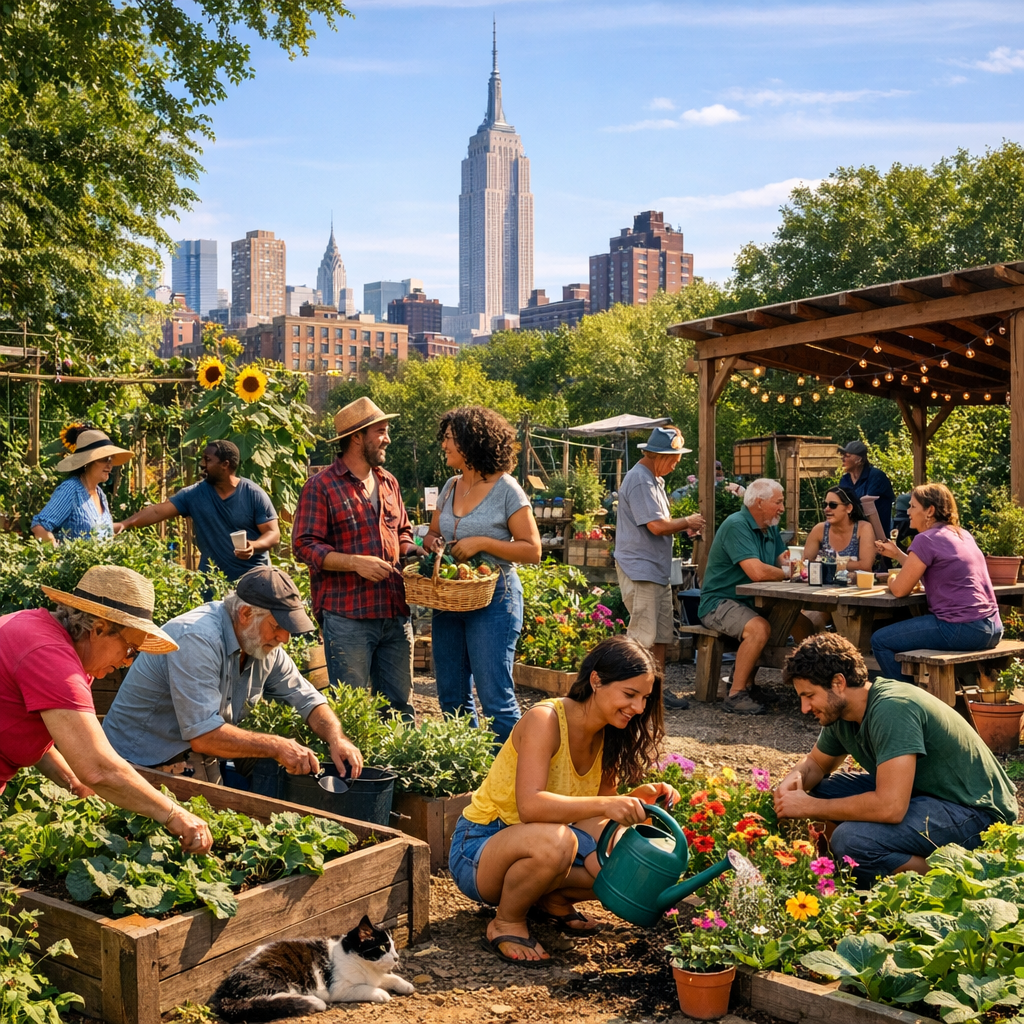
In the heart of New York City’s bustling neighborhoods, community gardens serve as verdant sanctuaries, offering residents a respite from urban life. These green spaces, often established on reclaimed vacant lots, have become vital centers for community engagement, environmental stewardship, and cultural expression.
A Rich History of Grassroots Initiatives
The community gardening movement in NYC took root during the 1970s, a period marked by economic challenges and urban decay. Residents transformed neglected spaces into thriving gardens, fostering a sense of ownership and pride. Today, the city boasts over 550 community gardens on city property, with additional gardens in schools, land trusts, and public housing developments, collectively enriching the urban landscape.
Fostering Social Connections and Cultural Expression
Beyond their aesthetic appeal, community gardens are hubs for social interaction and cultural expression. They provide communal spaces where neighbors collaborate, share knowledge, and celebrate diverse traditions. Gardens like The People’s Garden in Bushwick are renowned for hosting salsa dance parties and other community events, reflecting the vibrant cultures of their neighborhoods.
Environmental and Educational Benefits
Community gardens contribute significantly to environmental sustainability. They improve air quality, reduce urban heat, and manage stormwater runoff. Additionally, these gardens offer educational opportunities, teaching children and adults about horticulture, nutrition, and environmental responsibility. Programs like GreenThumb support over 500 member gardens, providing resources and technical assistance to community gardeners across the five boroughs.
Challenges and Resilience
Despite their numerous benefits, community gardens have faced challenges, including threats from urban development and policy changes. The demolition of Esperanza Garden in 2000 highlighted the tensions between community initiatives and city planning. However, the resilience of gardeners and supportive organizations has ensured the preservation and growth of many gardens, underscoring their importance to the city’s social and environmental fabric.
Looking Ahead
As New York City continues to evolve, community gardens remain essential in promoting social cohesion, environmental sustainability, and cultural diversity. They stand as testaments to the power of grassroots initiatives in transforming urban spaces into thriving, inclusive communities.