

New York City, renowned for its vibrancy and diversity, is currently grappling with significant challenges in affordability and mental health. Recent surveys and reports shed light on the depth of these issues and the community’s response.
Affordability Crisis
A recent survey revealed that 62% of New Yorkers, approximately 5 million individuals, cannot meet the true cost of living. This financial strain is particularly pronounced among Black and Hispanic communities, with 77.6% and 65.6% respectively facing the highest burdens. The gaps in housing, childcare, and healthcare are substantial, underscoring the city’s affordability crisis. [Source: Patch]
Mental Health Barriers
In tandem with financial struggles, mental health remains a pressing concern. A report by the NYC Health Department highlighted that about 945,000 adult New Yorkers reported an unmet need for mental health treatment in the past year. Barriers such as cost, lack of awareness of resources, and self-management beliefs contribute to this gap. [Source: NYC Health]
Community Initiatives
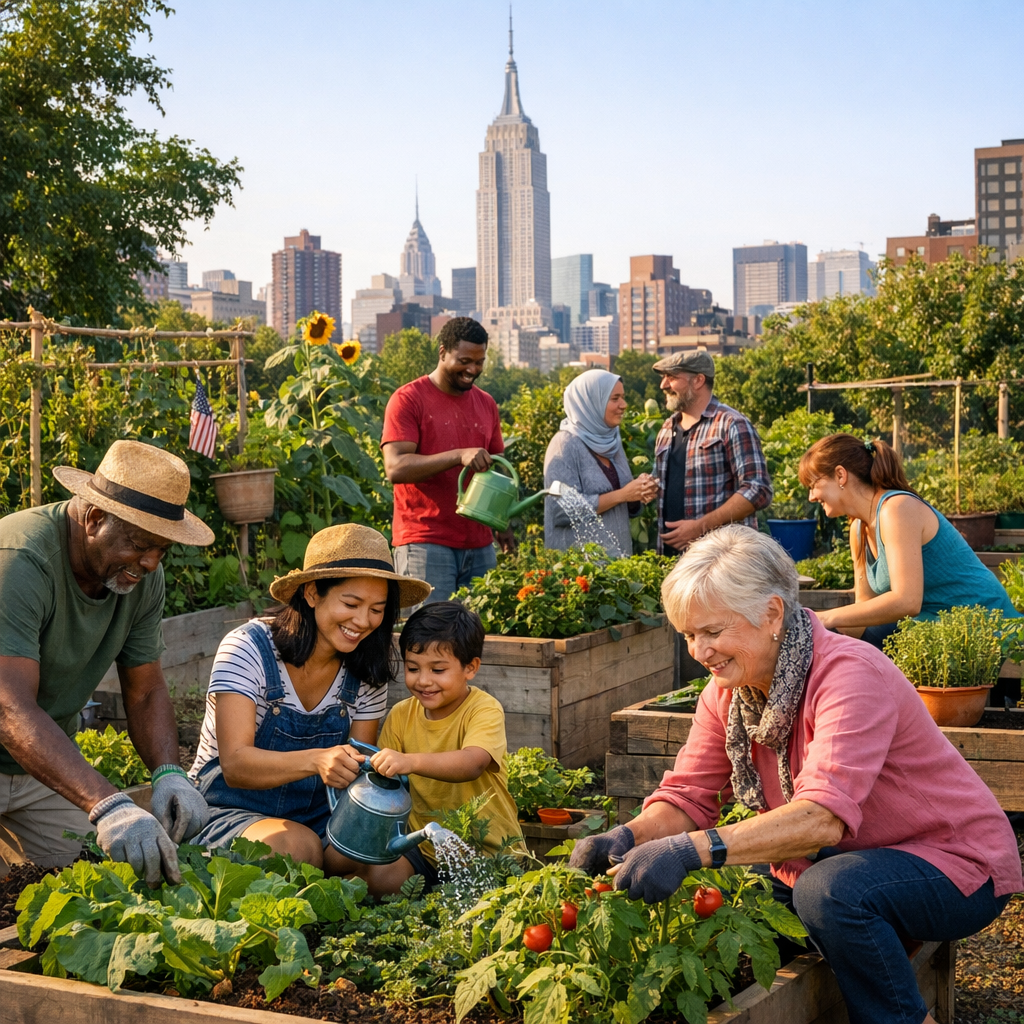
Despite these challenges, community-driven efforts are making a difference. Community gardens, for instance, have become vital spaces for residents. With over 550 community gardens on city property and more than 700 at public housing developments, these spaces offer not only agricultural production but also community and ethnic expression. They provide communal areas that are often lacking in the city, fostering a sense of belonging and support. [Source: Wikipedia]
Additionally, the establishment of the Office of Community Safety marks a step toward addressing mental health emergencies with a focus on reducing police involvement. This initiative aims to provide more appropriate responses to such crises, reflecting a shift toward community-centered solutions. [Source: AP News]
Looking Ahead
While the challenges are significant, the resilience and proactive efforts of New Yorkers offer hope. By continuing to support and expand community initiatives and addressing systemic barriers, the city can work toward a more equitable and supportive environment for all its residents.