

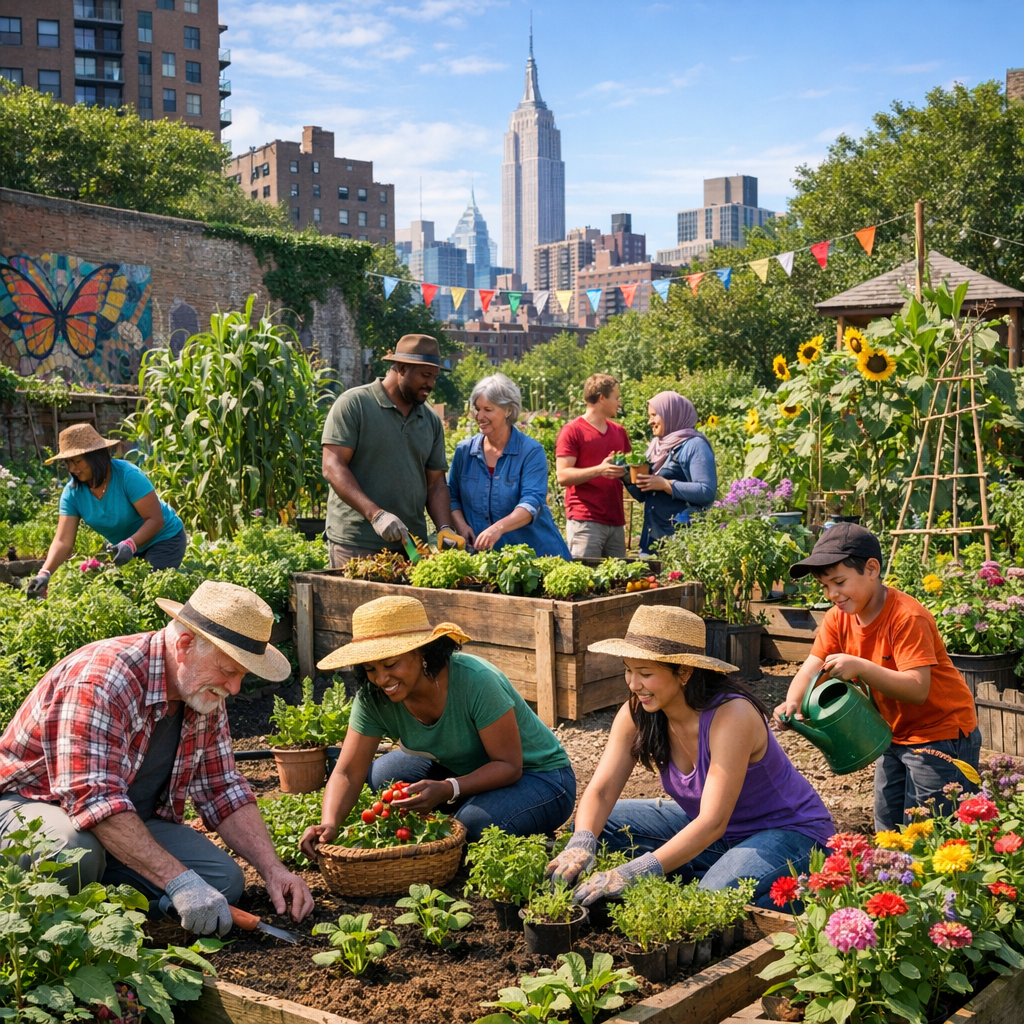
In the heart of New York City, amidst the bustling streets and towering skyscrapers, community gardens serve as vital green sanctuaries that bring residents together, promote environmental stewardship, and enhance urban living.
A Brief History of Community Gardens in NYC
The community gardening movement in New York City took root in the 1970s, a period marked by urban decline and vacant lots. Residents transformed these neglected spaces into vibrant gardens, fostering community engagement and revitalizing neighborhoods. Today, the city boasts over 550 community gardens on city property, more than 745 school gardens, and numerous others managed by land trusts and public housing developments.
Benefits to the Community
Community gardens offer numerous advantages:
- Social Cohesion: They provide communal spaces where neighbors can collaborate, share knowledge, and build lasting relationships.
- Environmental Impact: Gardens contribute to urban biodiversity, support pollinators, and help manage stormwater runoff.
- Health and Wellness: Access to green spaces encourages physical activity, reduces stress, and promotes mental well-being.
- Food Security: Many gardens grow fresh produce, offering residents access to nutritious, locally grown food.
Notable Community Gardens
Several gardens exemplify the spirit of community gardening in NYC:
6th & B Garden
Located in the East Village, the 6th & B Garden is a lush, green oasis offering beauty, peace, education, and entertainment to local residents and visitors of all ages. The garden contains fruiting trees, flowering shrubs, and innumerable herbs, flowers, and vegetables. Members cultivate raised beds and stage various programs, including crafts, horticultural workshops, culinary events, and multicultural festivals.
Liberty Community Gardens
Situated within West Thames Park in Battery Park City, the Liberty Community Garden has been active since 1987. Managed entirely by volunteers, it provides New Yorkers the opportunity to garden on small plots of land together with other interested people. Despite challenges such as the aftermath of 9/11 and subsequent relocations, the gardeners have remained a positive and active part of the larger Battery Park City community.
Getting Involved
For those interested in joining or supporting community gardens, several organizations offer resources and opportunities:
- GreenThumb: As the largest community gardening program in the country, GreenThumb provides materials and technical assistance to community gardeners throughout all five boroughs.
- GrowNYC: This organization has built more than 170 new community gardens and offers volunteer opportunities for individuals and groups.
- New York Restoration Project (NYRP): NYRP owns and supports over 50 community gardens across the city, providing access to nature, fresh food, and community gathering spaces.
Community gardens are more than just plots of land; they are the heartbeats of neighborhoods, fostering unity, sustainability, and a deeper connection to nature in the urban landscape of New York City.