

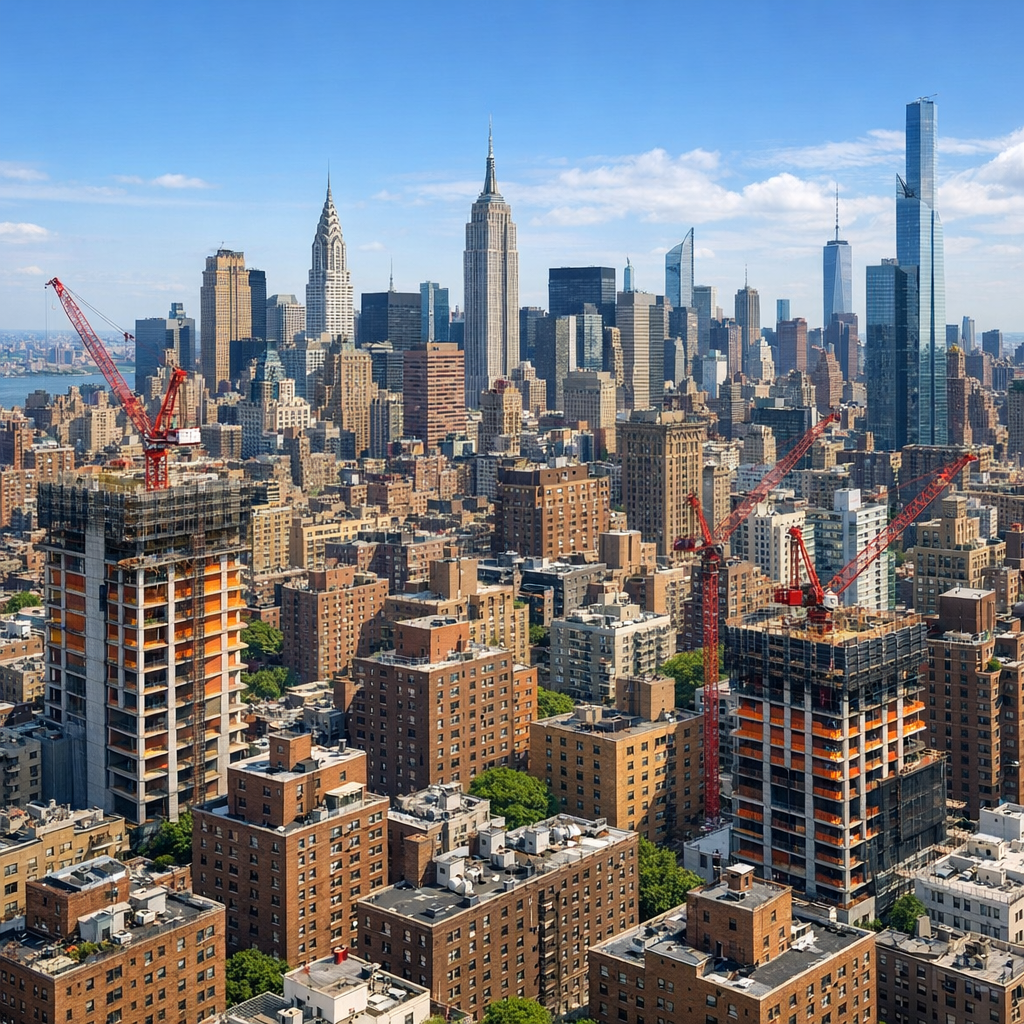
New York City’s real estate market continues to evolve, presenting both challenges and opportunities for residents and investors alike. Understanding the current landscape is essential for making informed decisions.
Market Trends
As of March 2026, the median sale price for homes in New York City reached $865,000, marking a 4.8% increase from the previous year. However, the median price per square foot declined by 9.12%, settling at $603. Homes are now spending an average of 80 days on the market, slightly longer than the 75 days observed last year. The number of homes sold in March was 2,432, a slight decrease from 2,451 in the same month the previous year.
Rental Market
The rental sector remains robust, with the median monthly rental price in New York City holding steady at $4,000, showing no significant change year-over-year. This stability suggests a consistent demand for rental properties across the city.
Affordable Housing Initiatives
Efforts to expand affordable housing are underway. Community Access has developed 20 affordable and supportive housing buildings in the Bronx, Brooklyn, and Manhattan, representing more than $400 million in real estate investments. Additionally, the transformation of Willets Point in Queens is progressing, with plans to create 2,500 units of affordable housing, a new public school, and the city’s first soccer-specific stadium. This project is expected to generate 16,000 jobs and contribute over $6 billion to the city’s economy.
Public Housing Developments
The New York City Housing Authority (NYCHA) continues to provide affordable housing to over 500,000 residents through its 335 developments. These efforts are crucial in addressing the city’s housing needs and ensuring that low- and moderate-income New Yorkers have access to safe and affordable homes.
Conclusion
New York City’s real estate market is characterized by rising home prices, a stable rental market, and significant investments in affordable housing. Staying informed about these trends is vital for anyone looking to navigate the complexities of the city’s housing landscape.